
Programmatic site for next-gen hydrogen.
We built a high-performance programmatic website with 2,000+ auto-generated pages for a next-gen hydrogen-membrane technology company, helping them rank on their most critical industry keywords — from hydrogen-production methods to country-level application pages.
2,000 pages, one afternoon crawl.
- Client
- Ionzera
- Industry
- Deep Tech
- Role
- Architecture, Data, Development
- Timeline
- 10 weeks
- Year
- 2025
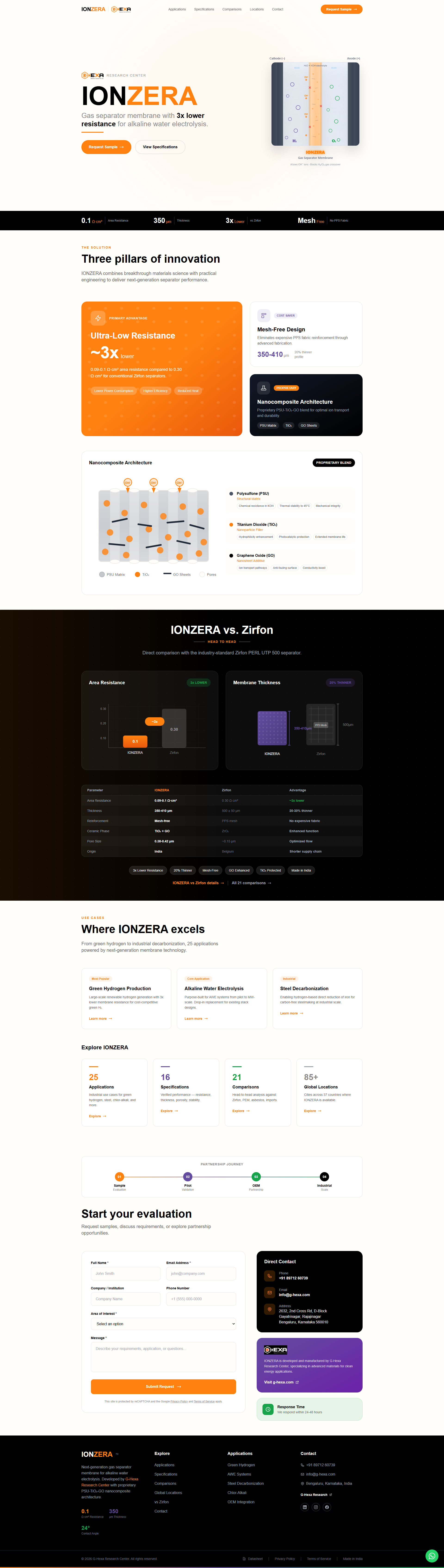
Own the long tail of hydrogen search.
Ionzera is a deep-tech company in an emerging category. The universe of terms a qualified buyer might search is enormous — every combination of production method × application × geography. Hand-writing pages for all of that would take years.
The brief was clear: build a site that automatically generates high-quality landing pages for each meaningful slice of the market, without ever producing the thin, template-feeling content Google penalises.
That meant designing the content model first, then the site, then the pipeline that populates every page with real, substantive, unique copy.
Programmatic Architecture
Matrix-based content model × Next.js static generation. Every cell of the matrix produces a unique, substantive landing page.
Content Gate
Automated 700-word unique-content check. Pages that fall short get noindex + follow — crawl budget stays clean.
Multi-Axis Pages
Application × Industry × Region matrix covers hydrogen production methods, use cases, and geography in all combinations.
SEO Infrastructure
Structured data, split sitemaps, hreflang for regional pages, clean canonical strategy — audit-ready from day one.
Locale-Aware Copy
India, Europe, and US variants with region-specific regulatory context and local energy-market data.
Zero-Maintenance Scale
Adding a new application type produces dozens of new pages automatically. Content ops stays tiny, footprint keeps growing.
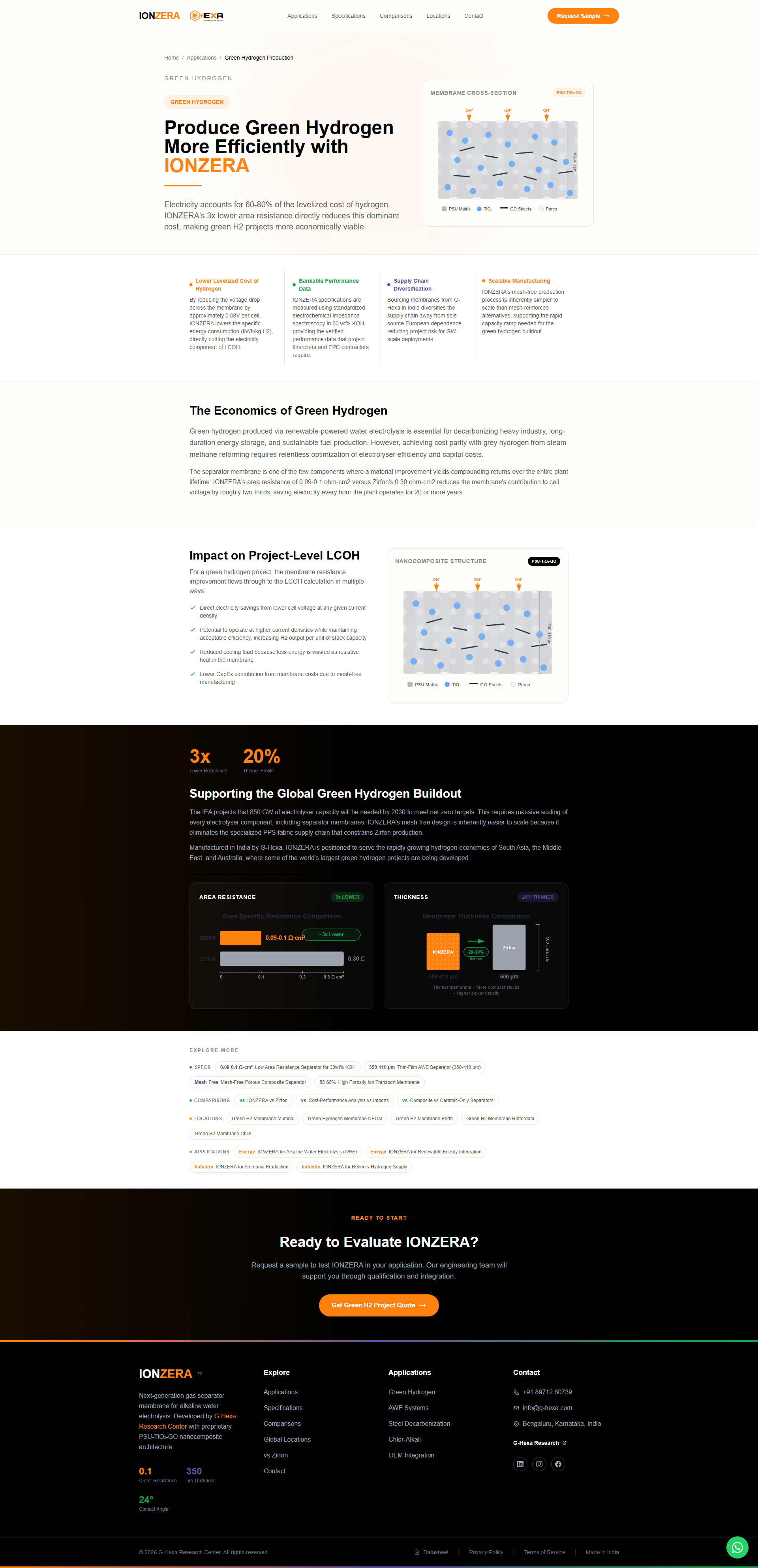
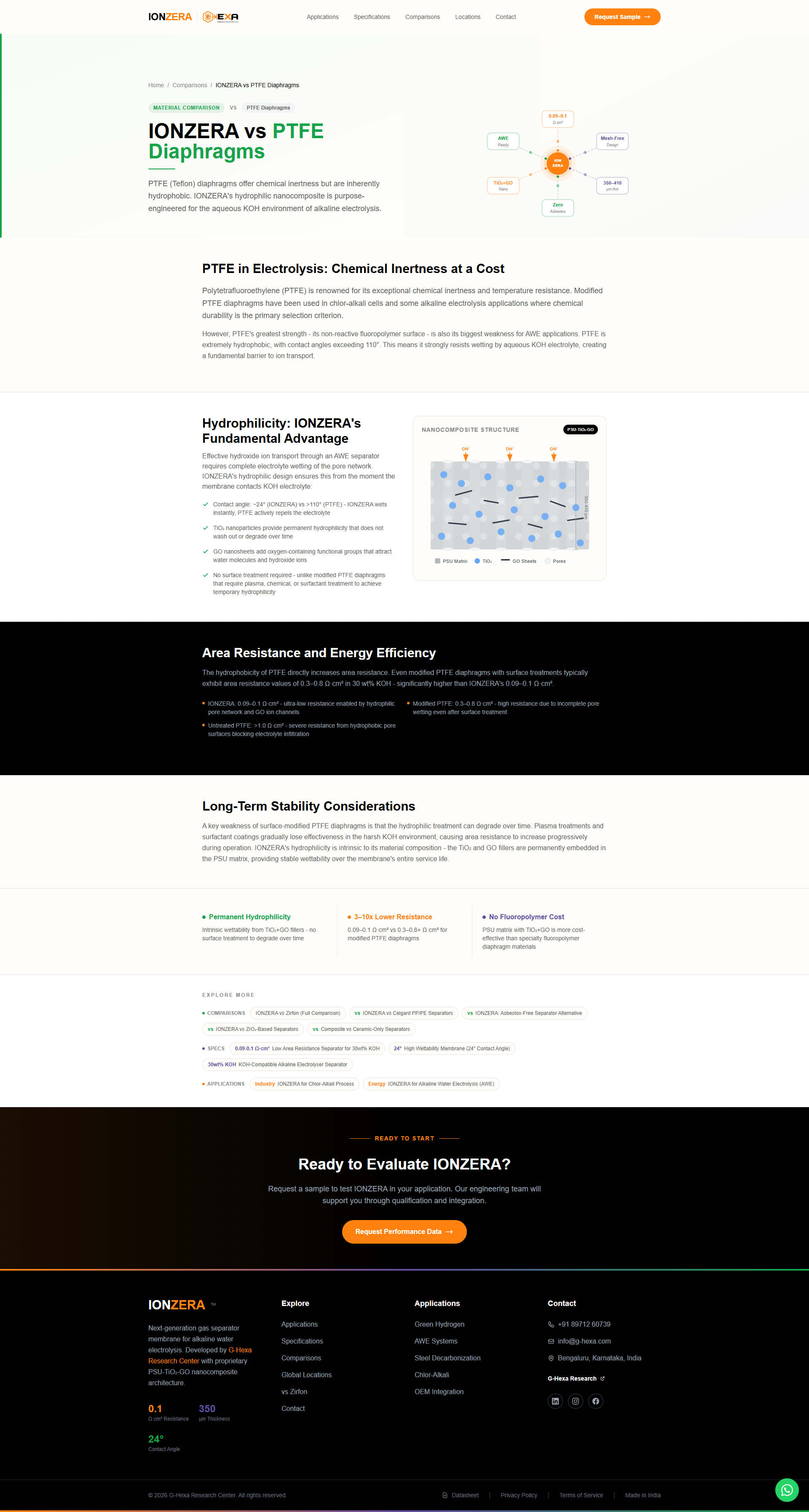
Data-driven pages with actual substance.
We modelled Ionzera's content as a matrix: application × region × product category, each with curated source content, real metrics, and locale-specific context. Every page renders from this shared data layer, so a single content update propagates across the entire site.
Each programmatic page carries 700+ words of unique, non-repetitive copy, locale-relevant case studies, and structured data markup. Pages under the word threshold are auto-noindexed to protect crawl budget and site quality score.
The front end is a Next.js build with full static generation, edge caching, and a sitemap that Google can walk end-to-end in an afternoon.
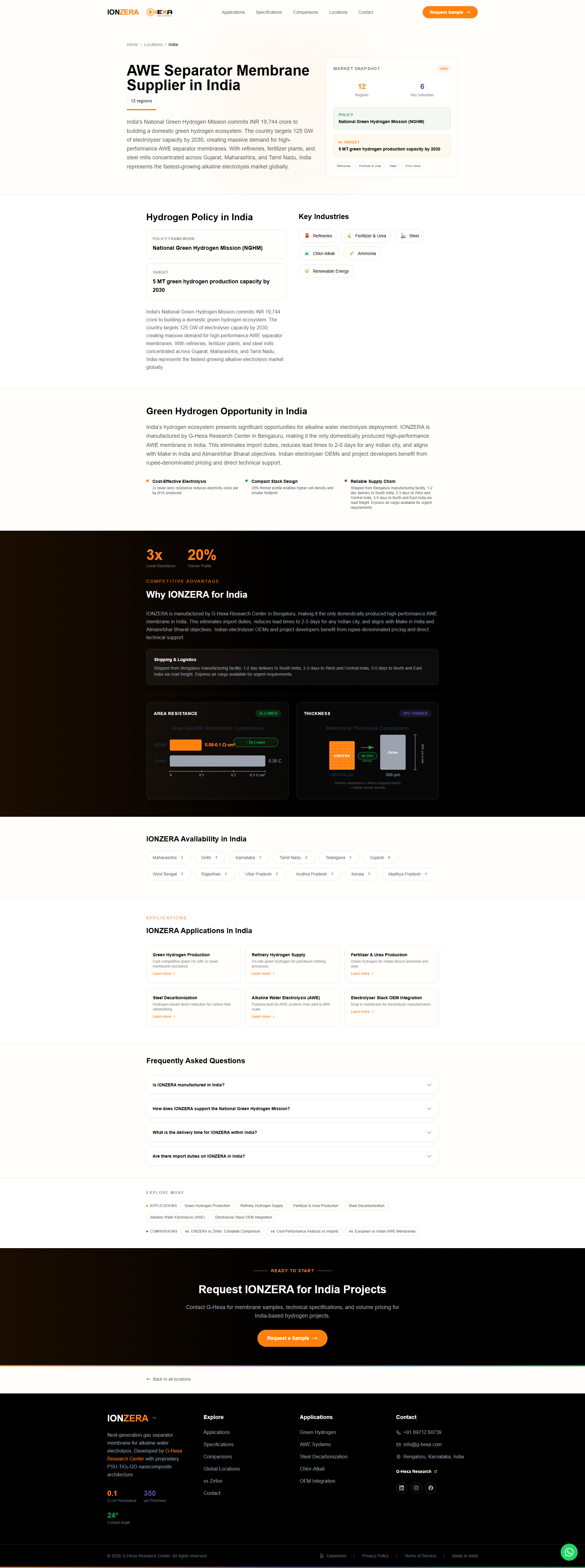
An indexable, always-fresh knowledge base.
Ionzera went from a stub site to a 2,000+ page indexed knowledge base in 10 weeks. Organic traffic on niche hydrogen-production queries started within weeks of launch and compounded as the sitemap was picked up.
The content infrastructure is now Ionzera's most strategic growth channel. Adding a new application type, region, or product variant auto-generates dozens of ranked pages — with no net-new engineering required.